The Zone of Interest: A Haunting Achievement

Les 3 points à retenir
- 1Guide complet et conseils pratiques
- 2Avis d'experts et recommandations
- 3FAQ et réponses aux questions fréquentes
Cinema of Absence
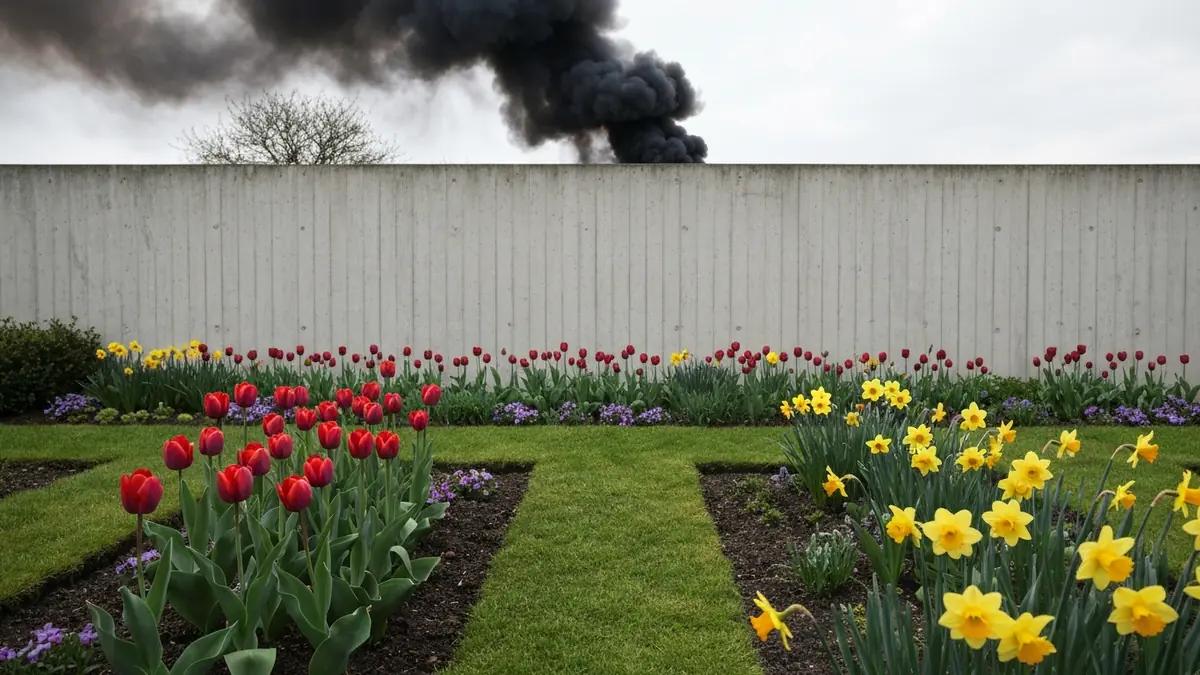
Jonathan Glazer's The Zone of Interest is unlike anything you've seen — and that's precisely the point. It tells the story of Rudolf Höss, commandant of Auschwitz, and his family living in domestic bliss in a comfortable house just beyond the camp walls. But the film never shows what happens on the other side. We see garden parties, bedtime stories, a mother planting flowers, children splashing in a pool. The horror is always present — in the sound, in the smoke rising above the wall, in the casual indifference of the family — but it is never depicted.
That absence is devastating. Glazer forces the audience to supply the images themselves, drawing on our collective knowledge of the Holocaust to fill the void. It's a radical formal strategy that makes the film's commentary on complicity not just intellectual but visceral.
The Source Material
The film shares its title with Martin Amis's 2014 novel, but Glazer's adaptation is extremely loose. Where Amis constructed an intricate fictional narrative, Glazer strips the story down to its documentary essence. The Höss family existed. The house existed. The garden separated from the camp by a single wall existed. By grounding the film in historical reality, Glazer makes its implications universal: this is what ordinary evil looks like, and it looks like a family going about their day.
Sound Design as Storytelling
The film's sound design, by Johnnie Burn, is its most powerful and most discussed element. Burn spent months creating a detailed, layered soundscape assembled from historical research and field recordings. Distant screams, gunshots, the rumble of trains, and industrial noise form a constant, almost subliminal backdrop to scenes of domestic normalcy.
On a quality sound system, the effect is profoundly unsettling. You catch fragments — a cry here, a mechanical grinding there — that your brain processes before your conscious mind registers them. It's the audio equivalent of peripheral vision: the horrors exist at the edges of perception, impossible to fully ignore but never directly confronted. In many ways, the sound design IS the film's thesis: atrocity doesn't announce itself to those who choose not to see it.
The sequence where Höss's mother visits and, unable to sleep because of the sounds and the glow from the crematoriums, silently packs her bags and leaves before dawn is one of the most devastating scenes in recent cinema — and it's told almost entirely through sound.
A Technical and Directorial Marvel
Glazer's approach to filming was as radical as the film's concept. Ten hidden cameras were installed throughout a meticulously reconstructed version of the real Höss house, built on location in Auschwitz. The actors — led by Christian Friedel as Rudolf and Sandra Hüller as Hedwig — performed entire scenes without a visible crew, monitored remotely by Glazer. The result has a voyeuristic, almost surveillance-camera quality that adds immensely to the film's sense of documentary unease.
The digital intermediate is pristine — the mundane beauty of the domestic scenes, with their carefully arranged gardens and sunlit interiors, contrasts sharply with what we know lurks beyond the frame. Cinematographer Lukasz Zal shoots everything with clinical precision, the camera rarely moving, the compositions static and symmetrical. It's the visual language of domestic contentment, weaponized into something deeply sinister.
Christian Friedel and Sandra Hüller
Christian Friedel plays Rudolf Höss with a terrifying banality. He is not a monster in any visible way — he's a bureaucrat, a careerist, a father who loves his children and takes pride in his garden. The horror lies in how easily he compartmentalizes his work from his home life. When he discusses the logistics of extermination, he uses the same tone he'd use to discuss household budgets.
Sandra Hüller — who also delivered an extraordinary performance in Anatomy of a Fall the same year — is equally remarkable as Hedwig. She's the "Queen of Auschwitz," as she calls herself, relishing the comfortable life the camp provides. Her delight in trying on a fur coat confiscated from a prisoner is one of the film's most quietly horrifying moments.
Mica Levi's Score
Mica Levi's score is used sparingly but to devastating effect. Abstract, atonal passages punctuate key moments, creating a sense of cosmic dread that transcends the historical specificity of the narrative. The thermal-imaging sequences — which show a local girl secretly hiding food for prisoners in the dead of night — are accompanied by some of the most haunting music in contemporary cinema.
Awards and Recognition
The Zone of Interest won the Grand Prix at the 2023 Cannes Film Festival and went on to claim the Academy Award for Best International Feature Film and Best Sound. The film's success represented a vindication of Glazer's uncompromising artistic vision — this is not an easy or commercial film, and its recognition by mainstream awards bodies speaks to its undeniable power.
Home Video Presentation
The Blu-ray release preserves the film's intentionally muted color palette and its 1.33:1 Academy ratio framing with precision. This is a film that was designed to look flat and domestic — the disc reproduces that aesthetic faithfully without sacrificing detail.
The lossless audio track is absolutely essential. So much of this film's impact depends on what you hear rather than what you see. The DTS-HD MA 5.1 track places the distant sounds of the camp in the rear channels with terrifying subtlety. A quality surround system transforms the viewing experience from disturbing to genuinely harrowing. This is one of the strongest arguments for physical media over streaming — the compressed audio of streaming services strips away the very layers that make this soundtrack so powerful.
Technical Specifications
- Video: 1080p AVC, 1.33:1 aspect ratio
- Audio: DTS-HD Master Audio 5.1
- Subtitles: English, German, Polish
Final Thoughts
This is not an easy watch, but it's an essential one. The Zone of Interest is filmmaking at its most rigorous and provocative — a film that trusts its audience completely and refuses to provide the catharsis of conventional Holocaust narratives. There are no heroic rescues, no redemptive arcs, no tears of recognition. There is only the wall, the garden, and the smoke.
Jonathan Glazer has made a film about how atrocity is enabled not by villains who cackle in the dark, but by ordinary people who tend their gardens while the world burns next door. It's a message that extends far beyond its historical setting — and that's what makes it essential viewing for our time.
Rating: 9/10

À propos de l'auteur
Sophie Laurent
Experte high-tech & audio
Ingénieure de formation, Sophie décrypte les technologies audio et vidéo pour vous aider à choisir le meilleur équipement selon votre budget.
You Might Also Like
Poor Things: Yorgos Lanthimos at His Most Audacious
Emma Stone shines in Lanthimos's wildest film yet — a surreal, funny, and visually dazzling adaptation of Alasdair Gray's novel about freedom, desire, and becoming human.
The Criterion Collection: 10 Essential Titles Every Cinephile Should Own
From classic Hollywood to international masterpieces, these Criterion releases represent the absolute best of physical media curation and film restoration.