Dolby Atmos at Home: A Complete Setup Guide

Les 3 points à retenir
- 11. An Atmos-Capable AV Receiver
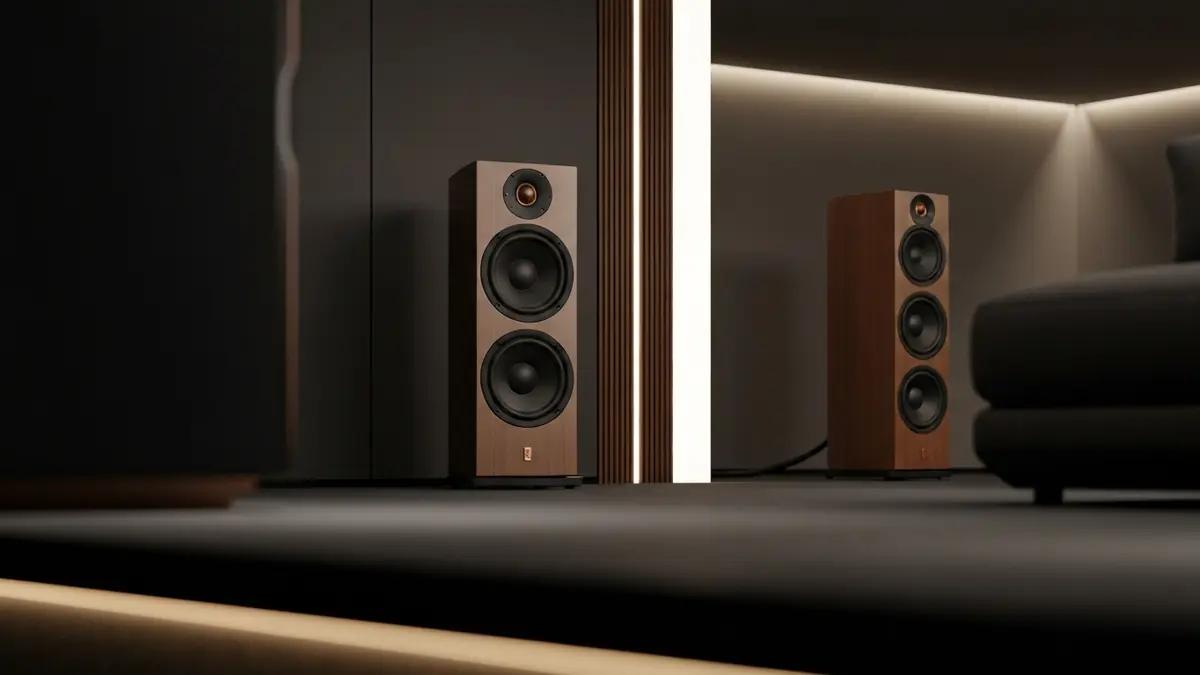
- 22. Height Speakers
- 33. Surround Speakers
What Is Dolby Atmos?
Dolby Atmos is an object-based audio format that fundamentally changes how film sound is mixed and delivered. Instead of assigning audio to fixed channels (left, right, center, surround), sound designers place audio "objects" in a three-dimensional space — including above the listener. Your AV receiver then renders these objects through your specific speaker configuration, creating a genuinely immersive soundfield that wraps around and above you.
The technology was first introduced in cinemas with Brave in 2012 and came to home theaters in 2014. Since then, it has become the dominant immersive audio format, supported by thousands of film and television titles, music releases, and video games.
How Atmos Differs from Traditional Surround
Traditional surround sound (5.1 or 7.1) places audio in a flat horizontal plane around the listener. Every sound is assigned to a specific channel — front left, center, surround right, and so on. This works well for creating a sense of envelopment, but it can't place sounds above you or move them precisely through space.
Dolby Atmos adds two critical capabilities:
-
Height channels: Speakers positioned above the listener (either ceiling-mounted or upfiring) create a hemisphere of sound rather than a flat ring. Rain falls from above, helicopters pass overhead, and ambient environments gain a vertical dimension that traditional surround can't replicate.
-
Object-based audio: Instead of premixing audio into fixed channels, Atmos tracks contain individual sound objects with positional metadata. Your receiver calculates where each object should appear based on your specific speaker layout. This means the same soundtrack can deliver an optimized experience whether you have 5 speakers or 34.
The practical difference is immediately apparent. Once you've heard rain in Atmos — with individual drops moving through three-dimensional space above and around you — flat surround sound feels like a compromise.
Why It Matters for Film
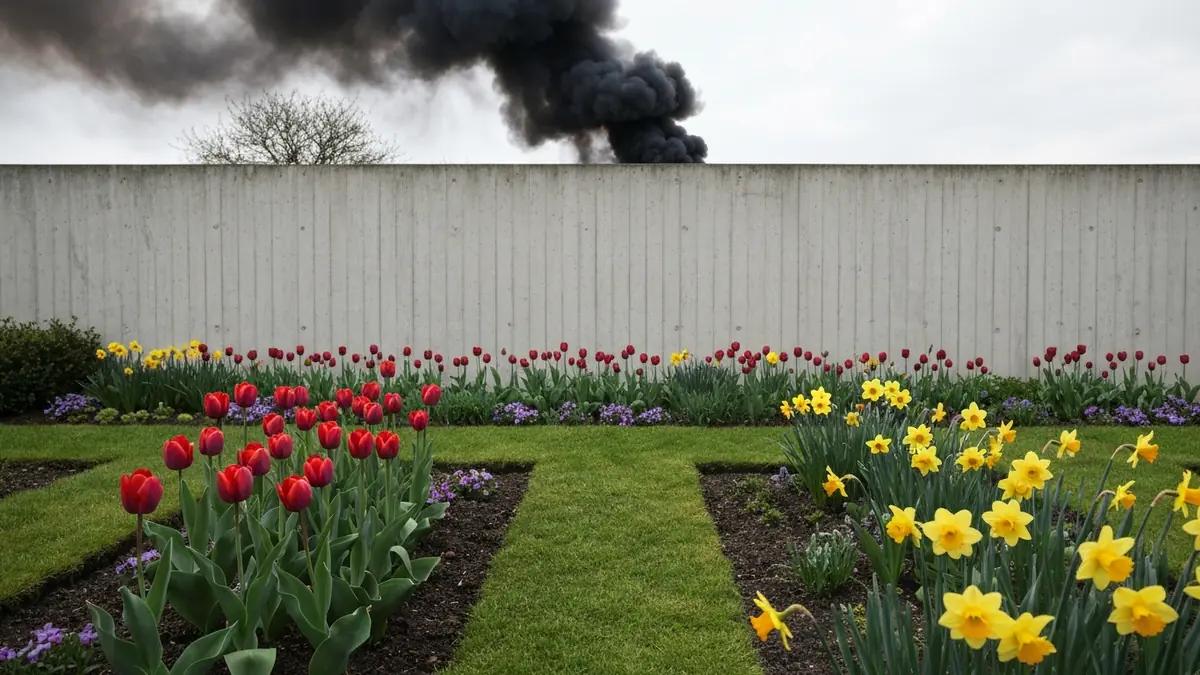
Films like The Zone of Interest, Dune: Part Two, and Oppenheimer use Atmos not as a gimmick but as an integral storytelling tool. The subtle ambience of Auschwitz beyond the garden wall in The Zone of Interest — the distant screams placed in the height channels, the industrial rumble below — creates a layer of horror that simply doesn't exist in stereo or standard surround.
The sandworm sequences in Dune: Part Two use the full Atmos soundfield to create a sense of scale that is genuinely overwhelming. Hans Zimmer's score moves through the height channels, the bass extension shakes the room, and the directional precision of the sandworm's approach creates a physical, almost frightening experience.
Oppenheimer's Trinity test sequence builds from near-silence to a detonation that uses every speaker in the system, with Ludwig Göransson's score swelling through the height channels before the shock wave hits. It's one of the most powerful audio experiences available on disc.
Equipment You Need
1. An Atmos-Capable AV Receiver
This is the heart of your system. The receiver decodes the Atmos signal and distributes it to your speakers. Here's what to look for:
Budget ($400–$600): The Denon AVR-S770H supports 7.2 channels with 2 height channels, making it suitable for a 5.1.2 system. It includes Audyssey MultEQ room correction and supports all current HDR formats.
Mid-range ($600–$1,200): The Denon AVR-X3800H is our top recommendation for most setups. It supports 9.4 channels, enabling a full 7.1.4 configuration. It includes Audyssey MultEQ XT32 (the most advanced version of Denon's room correction) and features a 105W-per-channel amplifier.
High-end ($1,200–$2,500): The Marantz Cinema 50 offers the same processing power as the Denon X3800H but with Marantz's signature HDAM amplification modules, which deliver a warmer, more refined sound. The Anthem MRX 740 is another excellent choice, featuring Anthem's acclaimed ARC Genesis room correction, which is widely considered the best in the business.
2. Height Speakers
You have three options for adding height channels, listed from best to most practical:
Ceiling-mounted speakers deliver the most convincing overhead effects because the sound actually comes from above. In-ceiling speakers from brands like KEF, SVS, or Polk are designed to be flush-mounted and nearly invisible. This is the gold standard, but it requires either new construction or cutting holes in your ceiling.
Atmos-enabled upfiring modules are speakers that sit on top of your existing front and surround speakers and bounce sound off your ceiling. They're a good compromise when ceiling mounting isn't possible. Their effectiveness depends heavily on ceiling height (8–9 feet is ideal) and ceiling material (flat, hard surfaces reflect best). The KEF R8 Meta and SVS Prime Elevation are top performers in this category.
Soundbar-based Atmos systems from brands like Sonos, Samsung, and JBL use sophisticated processing to simulate overhead effects without dedicated height speakers. The results are impressive for their size but cannot match the precision of a discrete speaker system.
3. Surround Speakers
For the ear-level surround channels, monopole (direct-radiating) speakers are preferred for the side positions, while bipole or dipole speakers work well for rear surround positions if your seating is close to the back wall. Matching your surround speakers to your front speakers (or at least using the same brand and series) ensures tonal consistency as sounds move around the room.
4. A Quality Subwoofer
Low-frequency effects anchor the entire Atmos experience. Bass provides the physical impact that makes explosions hit your chest and thunderstorms feel real. Without a quality subwoofer, your system will sound thin and unconvincing regardless of how good your other speakers are.
Look for a sealed or ported subwoofer rated to at least 20 Hz — this ensures you capture the deepest bass effects on modern soundtracks. Recommended brands at various price points:
- Budget ($200–$500): Monolith by Monoprice, BIC America, Dayton Audio
- Mid-range ($500–$1,000): SVS PB-1000 Pro, HSU VTF-2 MK5, RSL Speedwoofer 12S
- High-end ($1,000+): SVS PB-3000, REL T/9x, JL Audio Dominion D108
5. A 4K Blu-ray Player
Streaming Atmos is compressed — typically using Dolby Digital Plus, which maxes out at 768 kbps. The lossless Dolby TrueHD Atmos track on a 4K disc delivers audio at bitrates of 18–24 Mbps — roughly 25–30x more data. The difference is especially noticeable in quiet, atmospheric passages where streaming's compression introduces subtle but perceptible artifacts.
For the reference Atmos experience, a physical disc is non-negotiable. See our guide to the best 4K Blu-ray players for recommendations.
Recommended Configurations
Starter: 5.1.2 — Budget: $1,500–$2,500
Five ear-level speakers, one subwoofer, two height speakers. This is the minimum for a genuine Atmos experience and works well in rooms up to 250 square feet. Place the two height speakers above the front left and right positions for the most impactful overhead effects.
Sweet Spot: 7.1.4 — Budget: $3,000–$6,000
Seven ear-level speakers, one subwoofer, four height speakers. This is where Atmos truly shines. Objects can move convincingly across the overhead soundfield with four height channels, and the additional surround channels create a more seamless, enveloping bubble of sound. This is the configuration we recommend for dedicated home theaters.
Reference: 7.2.4 — Budget: $5,000–$12,000+
Same as above but with dual subwoofers. Two subs, placed asymmetrically in the room, smooth out bass response across all seating positions — eliminating the bass nulls and peaks that plague single-sub installations. If you have the budget and the space, dual subs are the single biggest upgrade you can make to any system.
Room Setup Tips
Speaker placement matters more than speaker cost. A $500 speaker system with proper placement will outperform a $2,000 system with poor positioning. Follow Dolby's official speaker placement guide (available on their website) as closely as your room allows.
Room treatment helps enormously. Even basic acoustic panels at first reflection points — the spots on the side walls where sound from your front speakers bounces toward your listening position — tighten the soundstage and improve clarity. A thick rug on the floor between the front speakers and your seat makes a noticeable difference too.
Run your receiver's room correction (Audyssey, Dirac, YPAO, or ARC) after positioning all speakers. Room correction measures the acoustic response from your listening position and applies equalization to compensate for room anomalies. It's not a replacement for proper speaker placement, but it polishes the result significantly.
Height speakers should be angled 15–30 degrees toward the primary listening position, not pointed straight down. This improves the perceived height of overhead effects and ensures that Atmos objects have a clear tonal match with your ear-level speakers.
Keep your center channel unobstructed. More dialogue comes from the center channel than any other speaker. It should be at ear height (or angled toward the listening position if mounted above or below the screen) and should never be blocked by furniture, shelving, or other objects.
Best Atmos Demo Discs
If you want to hear what your system can do, start with these reference-quality Atmos soundtracks:
-
Dune: Part Two — Hans Zimmer's score and the sandworm sequences are extraordinary. The bass extension is among the deepest we've measured, and the overhead effects during the desert storm sequences are breathtaking.
-
The Zone of Interest — A radically different use of Atmos. The height channels carry the distant sounds of Auschwitz — a subtle, terrifying application that demonstrates Atmos as a storytelling tool rather than a spectacle device.
-
Top Gun: Maverick — The flight sequences are pure Atmos showcase material. Jets streak overhead with pinpoint accuracy, and the cockpit sequences create a sense of claustrophobic immersion.
-
Blade Runner 2049 — Massive, enveloping soundscapes that reward every speaker in your system. The Spinner flyover in the opening sequence and the Sea Wall bass drop are legendary demo material.
-
Mad Max: Fury Road — Nonstop sonic chaos that puts every channel to work. One of the most aggressive and dynamic Atmos tracks ever produced. If your system can handle Fury Road, it can handle anything.
-
Gravity — Steven Price's Oscar-winning score moves through the overhead channels with haunting beauty, and the silence of space has never been so effectively rendered.
-
Oppenheimer — The Trinity test sequence builds from whisper to cataclysm, with Ludwig Göransson's score using the full hemisphere of speakers. The moment of detonation is one of the most powerful single sounds in home theater.
Troubleshooting Common Issues
"My height effects sound weak." The most common cause is upfiring speakers on a vaulted or textured ceiling. Upfiring modules need a flat, hard ceiling between 8 and 9 feet to reflect sound effectively. If your ceiling is higher or textured, consider ceiling-mounted speakers instead.
"Atmos objects don't move smoothly." This usually indicates a level mismatch between your speakers. Re-run your room correction, and verify that all speakers are set to the correct distance in your receiver's setup menu. Even small distance errors (a few inches) can disrupt object tracking.
"My receiver shows Atmos but it doesn't sound different." Confirm that your source is sending bitstream audio (not PCM). Check that your HDMI connection supports the required bandwidth — some older cables or TV pass-through connections can strip the Atmos metadata.
The Bottom Line
Dolby Atmos transforms film watching from observation into experience. The technology adds a dimension of immersion that flat surround sound cannot replicate — sounds move above, around, and through you in a way that fundamentally changes how you experience cinema at home.
You do not need to spend a fortune. A well-configured 5.1.2 system with ceiling-mounted heights, a quality subwoofer, and a lossless source will deliver moments that flat stereo or basic surround simply cannot match. Start there, and expand as budget and space allow.
The discs are waiting. Your ears are ready. It's time to hear what you've been missing.

À propos de l'auteur
Sophie Laurent
Experte high-tech & audio
Ingénieure de formation, Sophie décrypte les technologies audio et vidéo pour vous aider à choisir le meilleur équipement selon votre budget.
You Might Also Like
Best 4K Blu-ray Players in 2026: Our Top Picks
From budget-friendly options to high-end reference players, here are the best 4K Blu-ray players you can buy right now — tested and compared.
The Zone of Interest: A Haunting Achievement
Jonathan Glazer crafts one of the most disturbing and innovative films in recent memory — a masterpiece of restraint that redefines how cinema depicts atrocity.